The garden is part of our water system. Household wastewater passes through settling chambers and three planted beds, then recirculates in a channel inside the greenhouse.
From the house through three beds
Anders Solvarm of Ecorelief designed the original system. All domestic wastewater, including toilet wastewater, passes through three settling chambers and then three planted beds in sequence. A pump tank sends water to the first bed.
Water draining from the first bed returns to the next tank before being pumped to the second bed. The process repeats through a third bed. The same water passes through all three stages.
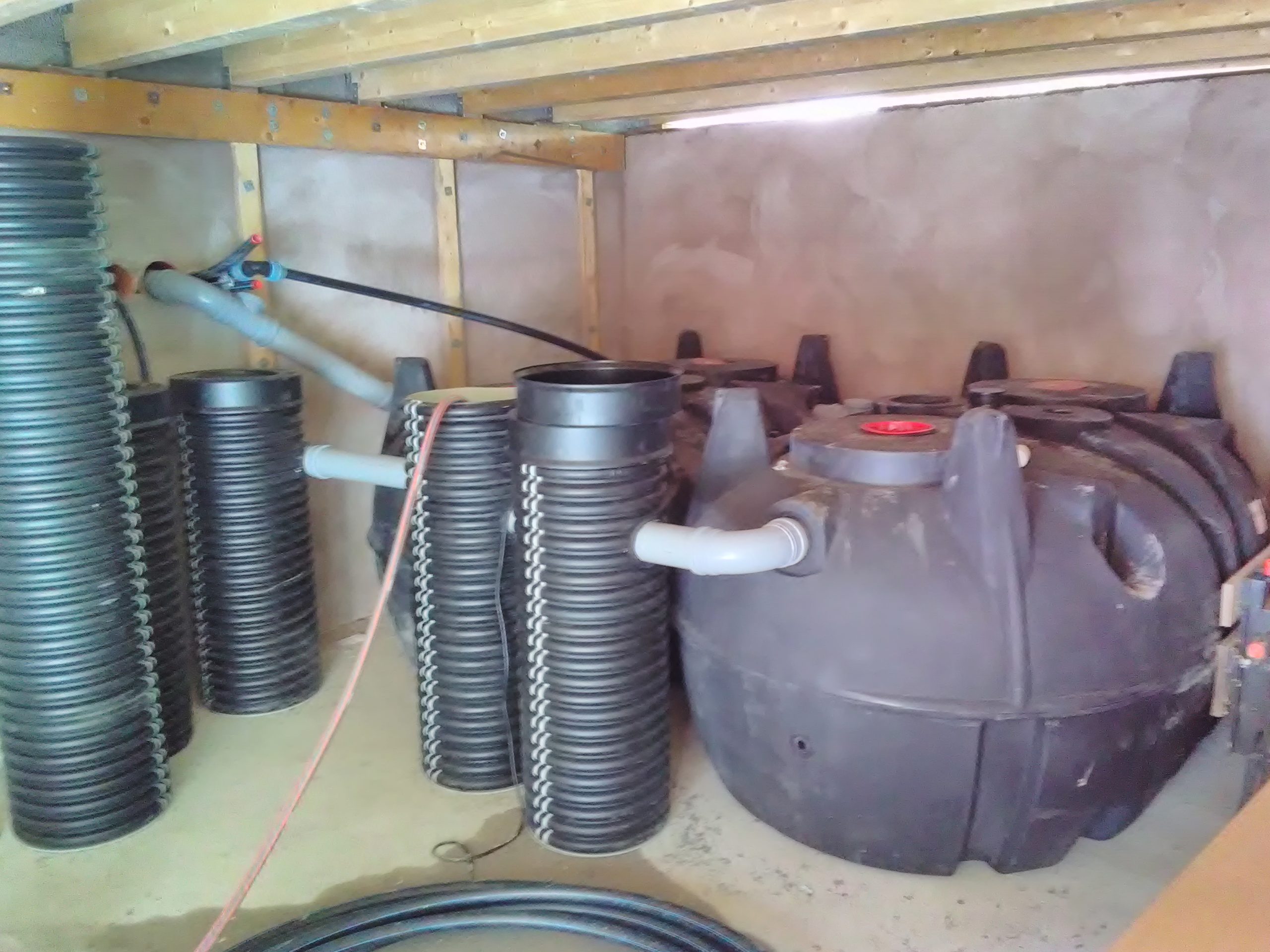
Inside a growing bed
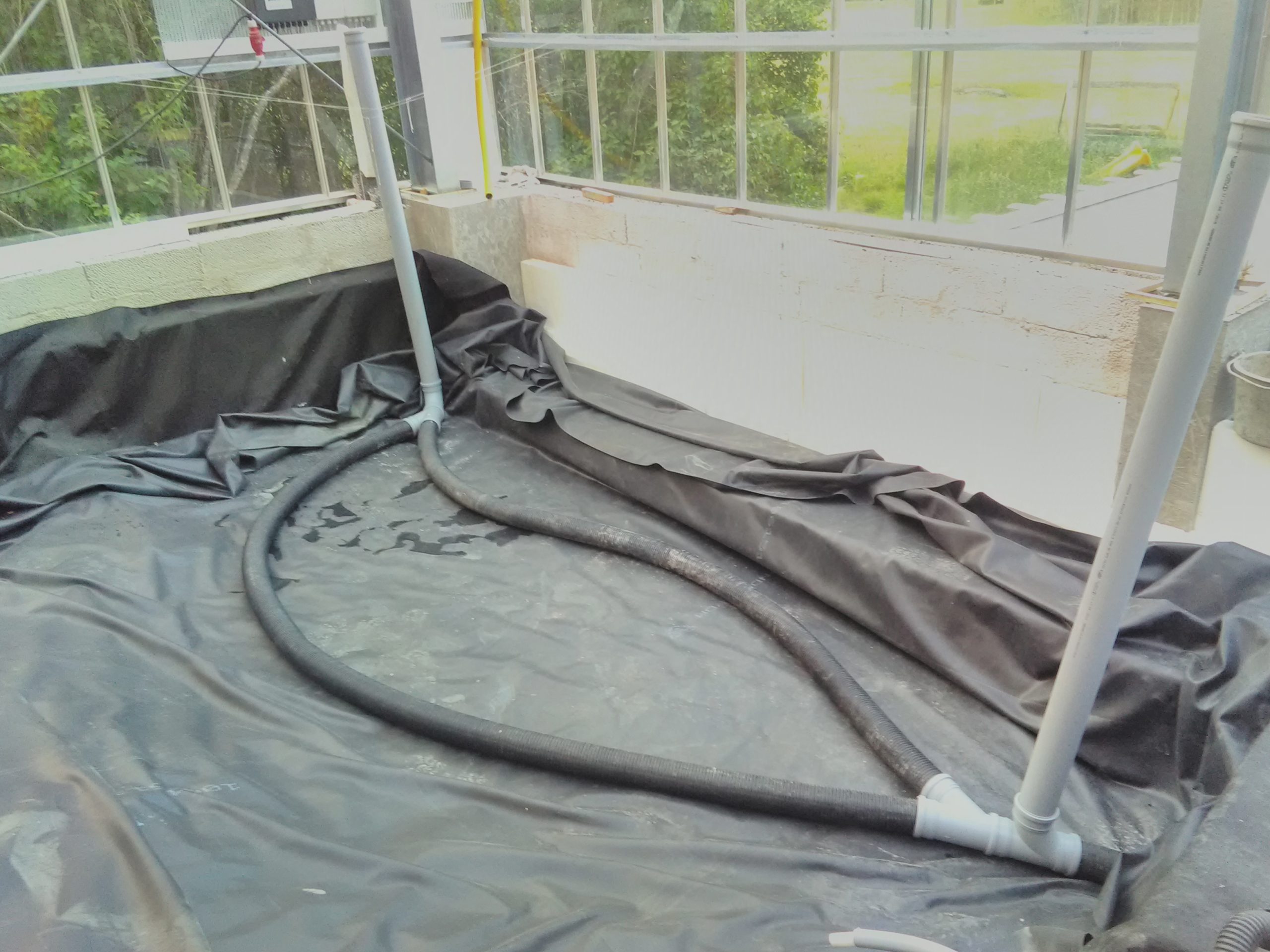
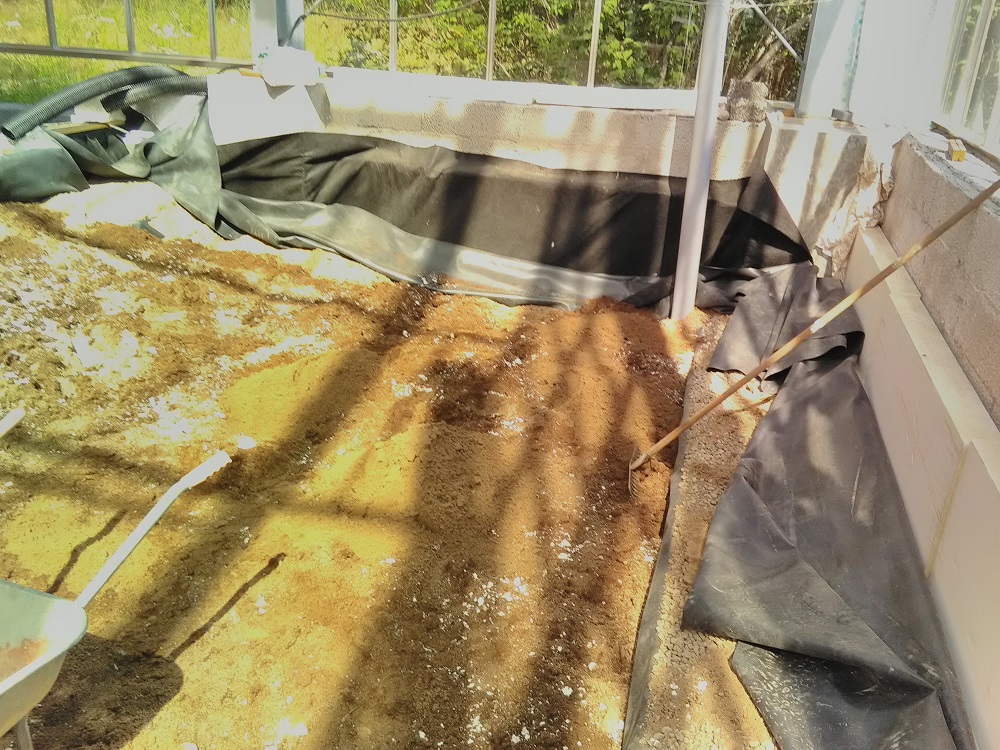
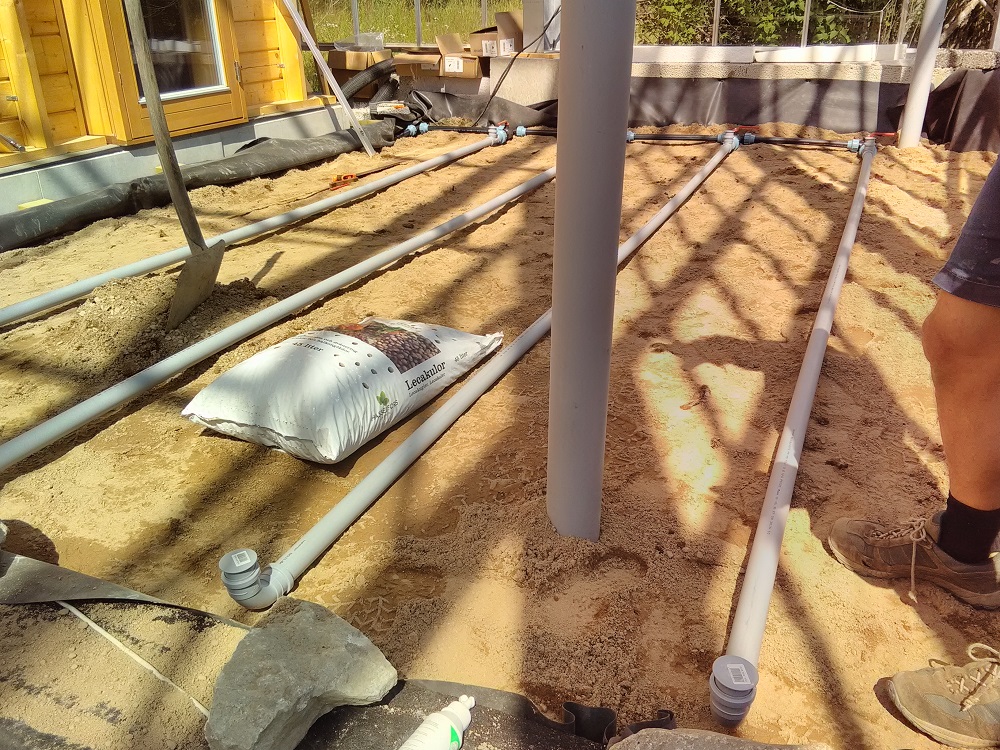
The construction record describes an EPDM-lined bed with drainage pipes at the bottom, a drainage layer and a sand-and-gravel-based growing medium. Distribution pipes below the surface spread incoming water through the bed. Inspection points allow access to the pipework.
The medium was mixed with peat, lime and charcoal. The documented aim was to support plants and microorganisms while allowing water to pass through the treatment stages.
Recirculation and overflow
After the third bed, water enters a channel inside the greenhouse. A pump recirculates it to the start of the channel. Excess water overflows from the pump well towards a stone-filled soakaway. In summer, we reroute the overflow to the first pump well. Surplus water is uncommon at that time of year: in our experience, most is used in the system or evaporates.
A separate drinking-water supply
Our drinking water comes from a 90-metre-deep drilled well. This is separate from the wastewater-treatment circuit.
Water samples
The archive contains water measurements from 2019. We also have later test reports, which have not yet been reviewed for publication here. Results need their sampling dates, locations, parameters and units; historical measurements do not establish today’s water quality.
Not drinking-water guidance. This page describes the treatment system in our home. It does not claim that treated wastewater is potable or suitable for unrestricted reuse.
Sources: the original system and bed-construction notes, July 2016 and April 2019. Current routing and operating details were confirmed by the owners in September 2026.