The nature-house idea predates Sundby by decades. Architect Bengt Warne developed the concept in Sweden in the 1970s: a home that works with natural flows instead of treating them as something outside the building.
A house inside a greenhouse
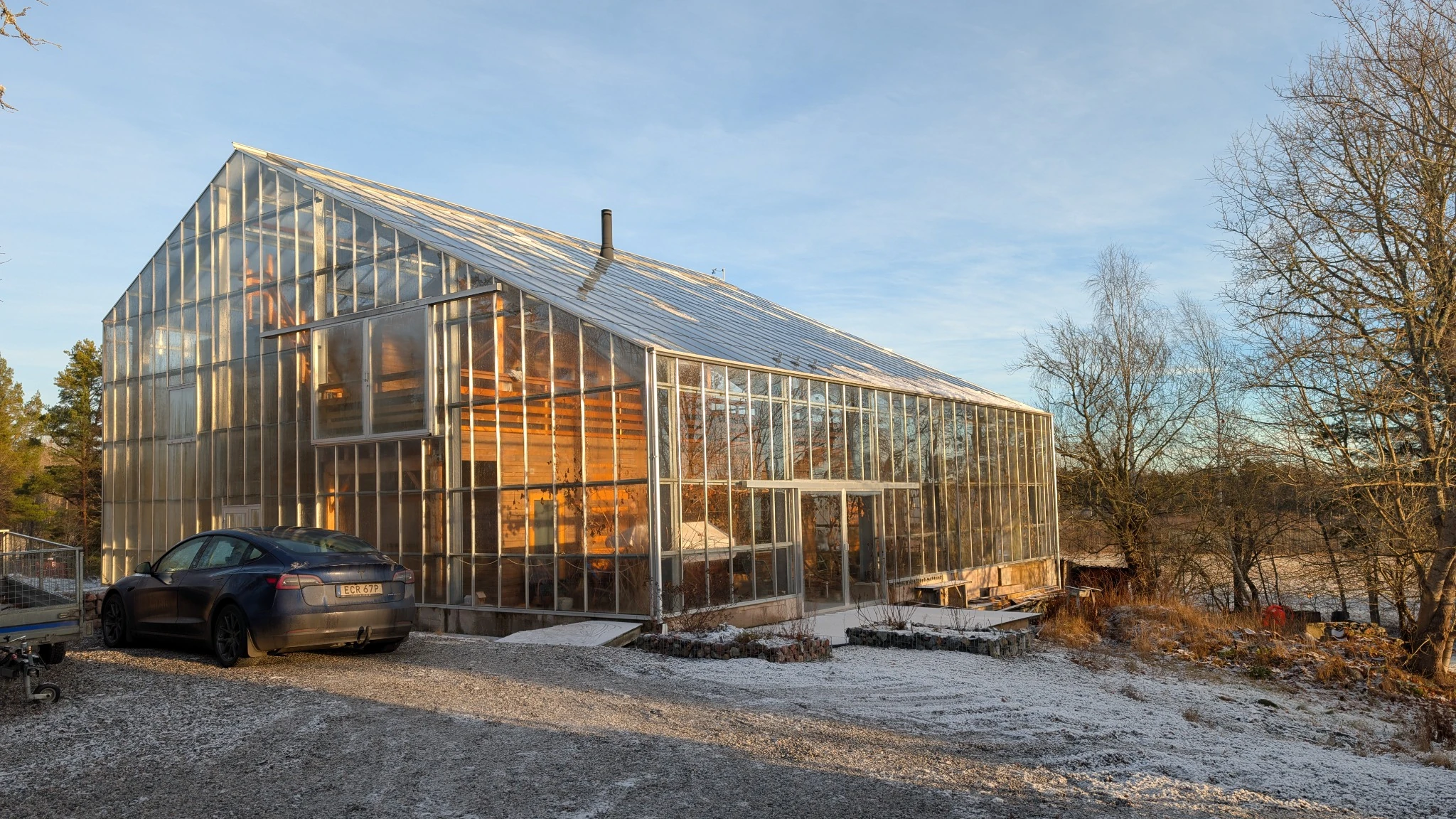
One of the defining ideas is a protected zone around the ordinary house. Glass can shelter the building from wind and precipitation, extend the growing season and create a climate between indoors and outdoors.
That does not make the greenhouse a permanently heated living room. It is a seasonal layer whose temperature follows sun, weather, ventilation and time of year.
Flows that stay visible
Warne’s writing connected housing to flows that are usually hidden: sunlight, rain, air, plants, nutrients and waste. The aim was not to reject technology, but to let biological systems do useful work where possible and use technology where it adds value.
In that spirit, a nature house gives the people living there more direct contact with the systems around them. Growing, airing, watering and adjusting the home are not abstract services somewhere else; they become part of everyday life.
Four ideas that still matter
Start with real needs
Let technology serve life rather than the other way round, and learn from natural systems when shaping buildings and routines.
Work with natural flows
Sun, wind, rain, soil and plants are not background scenery. They can become active parts of how a home works.
Keep the inhabitants involved
A home can give its inhabitants room to influence ventilation, heating, watering, growing and other everyday flows directly.
Use good technology where nature is not enough
Environmental technology and natural systems do not have to be opposites. The question is how they support each other.
Sundby is one interpretation
Sundby Naturhus was inspired by those ideas, but it is not a copy of Warne’s original house. The site, planning process, structure, water system and the lives lived here have shaped a different solution.
At Sundby, those ideas meet the practical demands of our site, our garden and family life. The pages about the house and how it works describe the result.
Historical source material: our original pages on the nature-house concept and Bengt Warne. Warne’s ideas were documented in the book På akacians villkor (1993), written with Marianne Fredriksson.