Keeping comfortable here changes with the season: making the most of winter light, opening the greenhouse in summer and keeping the timber house cool through the hottest days.
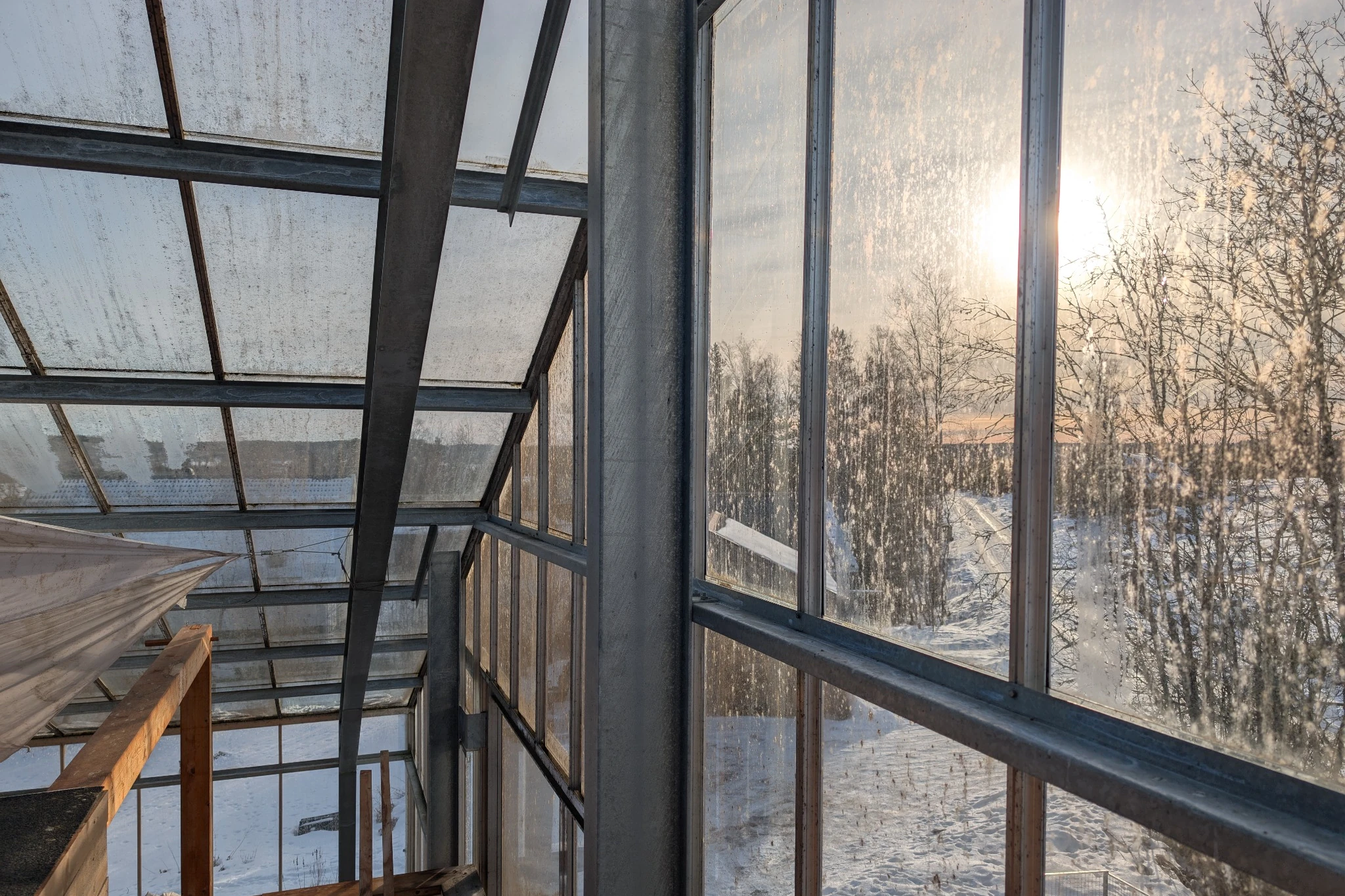
Sunshine is only part of the picture
The greenhouse shelters the timber building and admits solar warmth. On bright days, managing heat also means ventilation and shade. In winter, the greenhouse and the heated rooms inside are still different spaces.
We describe that seasonal experience here. We do not have a verified annual energy-saving figure for the greenhouse.
Heating and ventilation today
The systems below are in use as of September 2026. Earlier heating proposals remain in the archive as a record of the design process.
The ComfortZone EX50 supplies domestic hot water and underfloor heating on the ground floor. Upstairs, two oil-filled electric radiators heat the children’s rooms. The wood-burning stove is used occasionally in winter and is not connected to the water heating system.
The EX50 also provides the house’s exhaust ventilation, extracting air from the bathroom, laundry room and kitchen and recovering heat from it.
Managing greenhouse temperatures
The greenhouse roof vents open automatically in response to the temperature inside. We also open the large sliding doors manually when sunshine makes the greenhouse too warm. During the hottest periods, we keep the house’s doors and windows closed by day and air the rooms at night.
On hot days, we notice a strong upward flow of air as warmth escapes through the roof vents, especially when the lower openings are open too. Even with that airflow, a pocket of hot air remains near the top of the greenhouse, making the upper areas uncomfortably warm. The upstairs rooms in the timber house also get hot, and we occasionally use a portable air conditioner.
Air through the ground
A fan draws air into the greenhouse through a 160 mm pipe running roughly 40–50 metres under the lawn. It is made from pipe of the type used for drains or sewers. We mainly use it for summer cooling and to temper incoming air in winter. The greenhouse is not airtight and does not depend on this pipe for ventilation.
The pipe has its practical limitations. We have not cleaned it so far, and during wet winter periods water sometimes obstructs the airflow. We suspect that the drainage at the lowest point becomes submerged, but we have not confirmed the cause.
Solar and battery plans
As of September 2026, no solar panels or solar thermal collectors are operating here. Batteries have been purchased but are not yet installed. Solar panels on the garage are being considered alongside the battery installation; these are plans, not operating equipment.
Power is not energy
Power describes the rate at a particular moment, shown in watts or kilowatts. Energy describes the amount over a period, shown in watt-hours or kilowatt-hours. An annual total therefore needs an energy unit and a clear definition of what was included.
The archived 2018–2019 table has ambiguous column descriptions and units. We are preserving it as source material rather than relabelling the numbers by guesswork.
What we show now
Live data shows greenhouse temperature, outdoor temperature, outdoor humidity and UV index, with the source and time of each update. Historical climate charts are not currently available.
Historical sources: 2014 heating intentions and 2018–2019 data. Current operating details were confirmed by the owners in September 2026. Historical meter definitions and performance figures still need review.